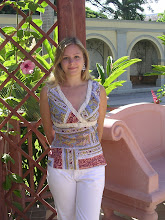
Taian is too crowded to be considered the country but too small to be a city. I often bemoan the fact that living in Taian is like living in a city without the conveniences of the city. For this reason, I had to make another trip into Anshan. A representative of the school met me at the bus station to help me complete my errands. Her name English name is Fairy (or at least that’s how she says it—I have never seen it written).
Fairy and I have met on several occasions and I was glad to have her with me because she speaks English well and one of the things I wanted to do was get my hair trimmed. I could do this in Taian but I was very nervous about it since my hair is different from the hair of the Chinese in texture and, in some ways, style. How many times have you gone to get your hair cut and asked for things to be one way but ended up with something different? It is difficult enough when you speak the same language but add a language barrier and I’m sure you can sympathize with my hesitation. I wanted to go to the salon with someone who spoke good English so they could understand exactly what I wanted and communicate it to the person cutting. Even though my hair is getting really long, longer than I would usually like it, I decided just to ask for a trim since it is the simplest thing to do. Fairy must have been very clear that all I wanted was a trim because the guy who was cutting my hair seemed reluctant to cut the length. It was one of the most modest cuts I’ve ever had in terms of the amount cut yet it took almost 45-minutes. He cut a little wet, blow-dried a section, cut some more, checked the length, cut a little more…always very small amounts at a time. I think he could have been done in 15 minutes but he seemed to like playing with my hair.
One of the other things I had to do in Anshan was send money to the States. I mentioned before that I make three times what the other teachers make but I’m not living the high life here because I still have bills in the States to pay so I need to send almost all of it. Fairy said that I could Western Union the money at the post office but first I had to take it to the money-changers to convert my RMB to US dollars. So, I had 8000 RMB in my purse, which is currently just over $1,100 and I was following Fairy as she approached some stately looking buildings. I figured we were going to a bank of sorts but she stops just outside one of the buildings where, sitting on the bottom step, there are three little old ladies in polo t-shirts and sunhats, resembling retirees who might be part of a bridge club. Fairy started talking to them then one pulls a fat roll of $100 bills out of her handbag. They must not have been associated with the building; it was just where they set up shop. It was so bizarre and I was so surprised I actually started laughing. It was like being in the movie, Men in Black, where people aren’t what they seem. In case you are wondering, I did check the bills to make sure they weren’t counterfeit.
Getting around Anshan is more difficult than getting around Taian because it is bigger and more crowded. I was thinking not that long ago that crossing the street in Taian takes a lot of the same characteristics one uses when sparring with the long sword: initiative, audacity, awareness, and commitment. If there are traffic rules, they are "more like guidelines" (movie quote :D) so cars can come from any direction at any time. This is multiplied in Anshan where there are wider streets, more cars, and more pedestrians. Crossing the street in Anshan is more like “Frogger”. Some streets have “walk” signals but this does not necessarily mean it is safe to cross the street since the traffic rules are largely ignored by the drivers and if the light changes while you are in the intersection, the cars will go around you. So, to cross the street, Fairy and I found ourselves crossing a lane, waiting in between lanes for some cars, crossing another lane, waiting for a bus to pass, and so on to get to the other side.
While I was in Anshan, I decided I wanted to buy a toaster-oven, an item which has been on my list for some time now. Fairy took me to a shopping center that would put a Wal-Mart Super Center to shame. Six stories of shopping bliss plus an underground grocery store! It is not quite a mall, since there aren’t different stores, but there are different brands, or in some cases, different vendors to choose from. Two floors are dedicated to women’s clothes. Fairy asked me if I like the clothes and I told her I find many of them too “cute” for my taste—a lot of puffy sleeves and hems, baby-doll looks, frills, etc. The appliances are on the top floor and amongst them I saw microwaves, percolators, scales, and more rice cookers than you can shake a stick at. I did manage to find a toaster-oven and can now enjoy pop-tarts (sent by my parents) hot!
Sunday, May 11, 2008

Tuesday, May 6, 2008
A Walk in the Park
The weather has warmed up considerably over the past week so I decided to take a walk through a park that is a short distance from my apartment the other day. I don't really have much experience with city parks but this one seemed to hold many of the characteristics I have come to expect from the Chinese, namely, a lot of seemingly unrelated things thrown together.
The entrance to the park is a tall, grey wall with a metal gate. It is a good thing they put a hanging Mickey Mouse (I think he lights up at night) on the wall or it would be quite ugly. Once inside, I was drawn to the left where a small lake sprawled and decided to walk around it. One side of the lake is on the border between the park and the town with only a narrow walkway and fence in between. The other side of the fence mostly looked like a site of demolished houses since there were bricks everywhere. On the lake, I saw a couple people in paddle boats and on one of the banks I saw a man drawing lake water to help him wash his motorcycle.
As I was finishing the circuit around the lake, I was surprised to come across a couple of bears. There is a miniature zoo of sorts and, although I didn't get a chance to go in, I saw maybe fifteen cages some with animals and some empty. I don't think the animals are here full time--I think they travel to a town, visit for a while, then move on to the next town.
Next to the zoo is a grassy area with a winding path and several odd monuments. Some of them were odd in the modern-art sense but others were odd because they didn't look like they belonged there at all, especially the Danish windmill. Too small to be real but too large to be for miniature golf, I have no idea what it is supposed to mean. There were some people running around these paths in fatigues and, although I'm fairly used to seeing this now since the students wear them, it turns out that these guys are actually part of the army. Some of them tried to talk to me but my Chinese is still not very good and they didn't speak any English at all so it was mostly an exercise in futility.
A walkway under carved and painted wood (quite beautiful) leads off into a carnival-like area with rides and games and what I assume is like a haunted house for kids given the noises that were coming out of it. I decided not to engage in puke-inducing frivolity on spinning rides for that day.
There is a good bit of nature in the park, however contrived, in the form of trees and shrubs. It seems a good place to take pictures, a fact that was supported when I spotted a newly-wed couple and photographer there. (Just as a side note: her dress was actually quite tame compared to the ones I described previously.) Many of the older people I observed were playing games like Chinese chess aka xiang qi or card games. The general atmosphere was cheerful but relaxed. Unfortunately, for my part, I cannot be totally at ease there because I still draw a lot of attention even with all the available distractions. While on my walk, I had the constant urge to wipe my nose thinking that I surely must have a booger sitting on it. Regardless, I think I'll be spending quite a lot of time in the park during the summer months.
The entrance to the park is a tall, grey wall with a metal gate. It is a good thing they put a hanging Mickey Mouse (I think he lights up at night) on the wall or it would be quite ugly. Once inside, I was drawn to the left where a small lake sprawled and decided to walk around it. One side of the lake is on the border between the park and the town with only a narrow walkway and fence in between. The other side of the fence mostly looked like a site of demolished houses since there were bricks everywhere. On the lake, I saw a couple people in paddle boats and on one of the banks I saw a man drawing lake water to help him wash his motorcycle.
As I was finishing the circuit around the lake, I was surprised to come across a couple of bears. There is a miniature zoo of sorts and, although I didn't get a chance to go in, I saw maybe fifteen cages some with animals and some empty. I don't think the animals are here full time--I think they travel to a town, visit for a while, then move on to the next town.
Next to the zoo is a grassy area with a winding path and several odd monuments. Some of them were odd in the modern-art sense but others were odd because they didn't look like they belonged there at all, especially the Danish windmill. Too small to be real but too large to be for miniature golf, I have no idea what it is supposed to mean. There were some people running around these paths in fatigues and, although I'm fairly used to seeing this now since the students wear them, it turns out that these guys are actually part of the army. Some of them tried to talk to me but my Chinese is still not very good and they didn't speak any English at all so it was mostly an exercise in futility.
A walkway under carved and painted wood (quite beautiful) leads off into a carnival-like area with rides and games and what I assume is like a haunted house for kids given the noises that were coming out of it. I decided not to engage in puke-inducing frivolity on spinning rides for that day.
There is a good bit of nature in the park, however contrived, in the form of trees and shrubs. It seems a good place to take pictures, a fact that was supported when I spotted a newly-wed couple and photographer there. (Just as a side note: her dress was actually quite tame compared to the ones I described previously.) Many of the older people I observed were playing games like Chinese chess aka xiang qi or card games. The general atmosphere was cheerful but relaxed. Unfortunately, for my part, I cannot be totally at ease there because I still draw a lot of attention even with all the available distractions. While on my walk, I had the constant urge to wipe my nose thinking that I surely must have a booger sitting on it. Regardless, I think I'll be spending quite a lot of time in the park during the summer months.
Sunday, April 27, 2008
Through the Window
A couple weeks ago I took the bus to Anshan. On the way, I recorded some of the scenes. I apologize for the shaking and fast moving cinematography...and for the music. This is an attempt to share more of the general atmosphere here but I don't think it comes through very clearly. I have said to a few friends that it is a good thing the people here are friendly because it is not a very attractive place to live. I don't think you can see in the video how rundown some of the buildings are nor how barren the landscape.
As I sit here and try to think of words to describe what is around me, I find that I cannot capture the whole picture. I guess what I can say is this: even if the people here are poor by American standards, I have observed that they are happy, perhaps even happier than many Americans. It is a strange phenomena that the more one has, the more one wants. No one here seems to feel sorry for themselves and they take great pleasure in the things that I, too, hold dear such as spending time with friends and family. Last Monday, at a dinner party while I watched everyone eating, laughing, and toasting, it came to me that people try to make happiness a complicated and elusive thing but really, happiness is a simple choice.
Monday, April 14, 2008
Miscellaneous, Part 1
Everyday I learn new things and make observations about China, its people, and their customs. Many of these things would not make a full-length post on their own, so I’m putting them together in an odds-n-ends post. I’m calling it part 1 because I’m sure I will have more random things to talk about at some point in the future.
The ladybugs and I are engaged in an epic battle of good and evil. (I’m the good guy.) They enter my house through the cracks around my windows, get into everything, then die leaving me to have to dispose of their remains. Every weekend I have to clean the ladybugs off my window ledges and sweep the floors because they are all over the place. I suppose, though, if my apartment is going to be infested with something ladybugs aren’t that bad.
A lot of people have asked me about the weather here. It started warming up last week and I think we are getting into the mid 60s most days. It has not rained too much and usually when it does, it is a light rain. But it is almost never sunny by my standards. I don’t think I would always call it cloudy, but there is a haze (I’m guessing its pollution) that is ever-present in the sky. I think only twice in the last month could I look up in the sky and see blue. It is strange to me, then, that a lot of people have solar panels. My water heater uses solar power--this probably explains why I had a hard time getting hot water before I had them install the electric water heater! I think they would be much better off with windmills because it is often windy--and at times VERY windy. I am not looking forward to next winter. The cold I can handle but when it is cold and there is a biting wind that is the worst!
I have observed that some people here are very fashion-forward. Others have good pieces but do not put them together well. The rest have it all wrong and look like they were barfed on by the 80’s. I have not done any shopping myself but the other day I was looking through a catalogue that belonged to one of the native English teachers who is engaged to Ricky (my assistant). I noticed in the catalogue that many of the pictures were of a boy and girl wearing identical or nearly identical outfits and I asked her why boys and girls like to dress the same. She explained that when a boy and girl are in a serious relationship they often get a matching outfit to show they are together. She said it was common for a boy or girl to give matching clothes as a gift to their significant other. I had to laugh about this because it is the opposite of what you would want to do in American culture. The students told me that when a boy and girl want to go on a date, they usually go shopping together. However, a student also told me that they are not allowed to date—I think this is a rule particular to our school, which is a private school and has a lot of live-in students.
The students still want me to sing to them all the time. I have learned that if the class is getting too noisy, all I have to do is hum or sing softly then they all get quiet so they can hear me.
One of the most striking things to me is the constant juxtapositions I see. Many of you noted that I described observing poverty in and around the city but that many of the students had camera phones in the same post. (Actually, they have devices that are phone/camera/MP3/MP4 player/translator/PDA/etc.) This is just one example. My internet and mobile services are more reliable than my water has been and the other day the electricity was out at the middle school but judging by the way people were acting it seems this is not all that uncommon. One would think that water and electricity services would be more stable than the technological ones. Also, I was struck the other day when I looked at a student’s desk. Many of the students decorate their desktops with pictures of pop icons, Mickey Mouse, etc. but this one student had a large periodic table of elements in the center of his desk surrounded by pictures of NBA stars and all types of guns from revolvers to assault rifles. He is a good student so I don't think I have worry about his mental health.
The Chinese have an affinity for the gaudy. I’ve seen wedding dresses in shop windows so garish that they elicit a gag reflex from me. Decorations are often brightly colored and plastic seems to be more in favor than natural materials. An example: there are some exposed pipes in my bathroom that the owner of the apartment tried to dress-up by hanging chains of fake flowers on them. Also, I was noticing the other day an old wooden cabinet in a teacher’s office. Some of the handles were neon green plastic, replacing the metal ones that used to be there. And another example: do you remember that door from my apartment tour? Well, I didn’t realize it at the time but if I turn the handle there are little lights above it that flash different colors. It’s like a disco every time I close the door!
I have always known that Americans are more embarrassed by body functions than other cultures and one thing I have noticed is that the Chinese think nothing of spitting. Spitting on the street is common practice and I suppose not all that strange (although seeing a woman hock a loogie still surprises me (my sister, Ashley, notwithstanding)) but it is also common to spit on the floor indoors. I have not seen any carpet in the places I have been and I wonder if there is no carpet because people spit or if people spit because there is no carpet. Regardless, people will spit on the floor in the hallways and in the classrooms but it should be noted that the floors are mopped throughout the day.
Finally, as many of you know, fireworks were invented in China and I must say they do love to set them off. Any occasion seems a good reason for fireworks here: someone is born, someone dies, someone gets married, someone opens a new shop, someone sneezes…there are fireworks going off at all times of the day and night. These are not the kind of fireworks like we have for the 4th of July. Mostly they are just a lot of noise and a little smoke. Sometimes it sounds like a war-zone with all the explosions!
Monday, April 7, 2008
Language Learning
I had three and a half years teaching experience before coming here but teaching English as a second language is a whole other game. For example, I can tell you the definitions of “when” and “while” and how they can be used as different parts of speech but I had difficulty explaining to one of the Chinese English teachers why “Will you wait _______ I get my coat?” should be “while” and not “when”. There are so many things in the English language that we, as native speakers, take for granted. I catch myself using expressions and idioms all the time and often have to stop to explain them. Not to mention slang, jargon, colloquialisms, etc.
One thing that I do have going for me is my knowledge of British English, thanks to the years I spent in Australia. This has come in handy a few times like when a student asked to go to the WC. I explained to them that Americans do not call it a WC and many might not even understand because we call it a restroom or bathroom. I also mentioned that if they ask for a bathroom in England, Australia, New Zealand, etc. that people would think they needed to take a shower. For this reason, I recommended that they practice asking for the toilet so that no matter where they go, the message is clear.
What I teach is more or less up to me. Being the Montessorian that I am, I asked the students what it is they want to learn from me. A lot of them want to learn songs (this week we are talking about American music), and they asked to learn about customs, places to visit, American schools and education, everyday English, and (to my surprise) grammar. One boy asked me to teach about housecleaning but I’m not entirely sure he was serious.
I am not only here to teach English. One of my major goals is to gain some proficiency in Mandarin Chinese, or Hanyu, as they would say. (I specify Mandarin since one of the other major languages in China is Cantonese, spoken in the south including in major cities such as Hong Kong. Many of the people here watch Mandarin-subtitled movies made in Cantonese.) I did not come here knowing nothing of Mandarin since I had two semesters of study in college but that was five years ago now and I had forgotten much. I did begin to remember more as I have stayed here. Sometimes a word would just pop into my head that I hadn’t even remembered I’d forgotten (the feeling is a bizarre as the description). There are some things I’ve been trying to learn out of necessity such as the names of foods or crucial questions but I was also given a lesson book to help me study.
As you know, the Chinese alphabet is made up of characters. There are some 48,000 characters but only about 4,000 or 5,000 are used in everyday language. When writing characters, one uses strokes. If you think of drawing a “k” you first make the long, downward line, then the right-to-left down diagonal line then the left-to-right diagonal line. It is similar in Chinese. There are 30 different strokes though some are certainly more common than others. Basic characters are called radicals and if one knows radicals, one can often guess the general meaning of more complicated characters. For example, 木 (mu4) means “wood” and 木桶 (mu4tong3) is a cask and 森 (sen1) is a forest.
When speaking Mandarin, one of the most challenging things for me is using the proper tone. For each sound there are four ways to say it- a steady tone (first tone), a rising tone (second tone), a dipping tone that lowers then rises (third tone) and a lowering tone (fourth tone). So, even if you know that he1 means “drink” you need to say it with a steady tone or else you could accidentally say “and”. Then it gets even more complicated because some of the same sounds and same tones can mean different things depending on the context of the sentence!
One thing that I do have going for me is my knowledge of British English, thanks to the years I spent in Australia. This has come in handy a few times like when a student asked to go to the WC. I explained to them that Americans do not call it a WC and many might not even understand because we call it a restroom or bathroom. I also mentioned that if they ask for a bathroom in England, Australia, New Zealand, etc. that people would think they needed to take a shower. For this reason, I recommended that they practice asking for the toilet so that no matter where they go, the message is clear.
What I teach is more or less up to me. Being the Montessorian that I am, I asked the students what it is they want to learn from me. A lot of them want to learn songs (this week we are talking about American music), and they asked to learn about customs, places to visit, American schools and education, everyday English, and (to my surprise) grammar. One boy asked me to teach about housecleaning but I’m not entirely sure he was serious.
I am not only here to teach English. One of my major goals is to gain some proficiency in Mandarin Chinese, or Hanyu, as they would say. (I specify Mandarin since one of the other major languages in China is Cantonese, spoken in the south including in major cities such as Hong Kong. Many of the people here watch Mandarin-subtitled movies made in Cantonese.) I did not come here knowing nothing of Mandarin since I had two semesters of study in college but that was five years ago now and I had forgotten much. I did begin to remember more as I have stayed here. Sometimes a word would just pop into my head that I hadn’t even remembered I’d forgotten (the feeling is a bizarre as the description). There are some things I’ve been trying to learn out of necessity such as the names of foods or crucial questions but I was also given a lesson book to help me study.
As you know, the Chinese alphabet is made up of characters. There are some 48,000 characters but only about 4,000 or 5,000 are used in everyday language. When writing characters, one uses strokes. If you think of drawing a “k” you first make the long, downward line, then the right-to-left down diagonal line then the left-to-right diagonal line. It is similar in Chinese. There are 30 different strokes though some are certainly more common than others. Basic characters are called radicals and if one knows radicals, one can often guess the general meaning of more complicated characters. For example, 木 (mu4) means “wood” and 木桶 (mu4tong3) is a cask and 森 (sen1) is a forest.
When speaking Mandarin, one of the most challenging things for me is using the proper tone. For each sound there are four ways to say it- a steady tone (first tone), a rising tone (second tone), a dipping tone that lowers then rises (third tone) and a lowering tone (fourth tone). So, even if you know that he1 means “drink” you need to say it with a steady tone or else you could accidentally say “and”. Then it gets even more complicated because some of the same sounds and same tones can mean different things depending on the context of the sentence!
Sunday, March 30, 2008
Food
Other than friends, family, and a hot bath, the thing I am missing the most is American food. I have mentioned this in some of my personal emails already, but today, it will be the topic of my post.
I will admit that my eating habits have never been particularly good (it’s a good thing I was blessed with a fast metabolism or I would be fat). In the States, pizza, chocolate, and wine were regular parts of my diet. I knew that my food choices would be different here in China and I was right.
Before I came, I heard that people tended to eat out more than they cooked at home and that it was less expensive to do so. This is only partly true. People do dine in restaurants frequently but it is more because they don’t know how to cook than for economic reasons. This has presented a few challenges for me. I cannot read menus to order foods and generally prefer to eat at home anyway (where I don't get stared at). Because people aren't really interested in cooking, supermarkets have very few “ingredients” and mostly carry snack-like items. Ramen noodles and frozen dumplings are readily available and have become staples in my diet. I have a hard time trusting the meats I can buy in the markets because they are either, quite literally, chopped up parts, or they come in blocks of processed who-knows-what. Fruits and vegetables are generally not sold in supermarkets. Rather, there is an outdoor farmer’s market and small produce shops that sell them. Some veggies are still hard to find, however, such as iceberg lettuce (I think the climate is too harsh for it). Another challenge in food preparation is that I only have a stove. I am saving up for toaster-oven because, although I have not seen any, I am told I can find one.
Refrigerators are not considered a necessary household appliance and many people do not own one. This means that there are few items sold in supermarkets that require refrigeration including one of my favorites, dairy products. Milk is sold off the shelf in juice boxes (needless to say, it does not taste the same) and butter and cheese are not available in Tai’an. I am told that in the city, I can find some honest-to-goodness Land o’ Lakes cheddar but that I will pay 30 RMB for it. When translated into dollars, this does not sound too bad (a little more than $4) but in terms of cost of living it is nearly a third of my weekly food budget. The Chinese do make wine but it is not very good and I will pay 50 RMB or more for a decent bottle. Again I am told I can buy an imported wine in the city but it will cost me 230 RMB. To put this into perspective, I paid 250 RMB for my cell phone. The only thing I have found in Tai’an that is imported (and tastes like the real thing) is Dove chocolate and although it is not cheap, I splurge on a few.
As far as restaurants go, I talked about that a little already when I first got here. The included video features the same restaurant we ate at when I first arrived (we have been there several times since it is right next to the school). I have eaten several places, however, and have found a few general rules. Place settings always consist of chopsticks, a bowl and spoon, a tea cup and saucer, and a glass. A variety of dishes are ordered and placed on the table to share. It is unheard of for a dish to be considered one person’s. When a large party is present, there do not seem to be any rules about how the lazy-susan is spun—you just eat from the dishes that are in front of you until the table is spun and you are presented with new dishes or if there is something you want, move the table yourself. I do see a lot of value in this kind of communal eating. Besides tea, beer is the most common beverage and it, too, is shared since the bottles are large and the glasses are small.
The dishes that are served are usually tasty but generally simple in their ingredients. One of my favorites, sweet and sour pork (different from what you have tasted in the States), is, unfortunately, one of the more difficult dishes to make and requires ingredients I have not found in the supermarket (like flour). The only thing I have rejected eating on the basis of ingredients was a dish of what looked like white semi-translucent jello slices. I was told it was pigskin that was boiled down. That ranked too high on my “eww” scale to warrant a taste. I think the strangest thing I have eaten so far was a meat that was served on a dish with the cooked heads of the animal. The heads were suspiciously close to the size of a small dog’s so I asked what the animal was. I was told but had never heard of the animal before and was told it was like a horse. The meat didn’t taste too bad but I only had a little bit because I had a hard time getting over the mental block that I was eating horseflesh.
I will admit that my eating habits have never been particularly good (it’s a good thing I was blessed with a fast metabolism or I would be fat). In the States, pizza, chocolate, and wine were regular parts of my diet. I knew that my food choices would be different here in China and I was right.
Before I came, I heard that people tended to eat out more than they cooked at home and that it was less expensive to do so. This is only partly true. People do dine in restaurants frequently but it is more because they don’t know how to cook than for economic reasons. This has presented a few challenges for me. I cannot read menus to order foods and generally prefer to eat at home anyway (where I don't get stared at). Because people aren't really interested in cooking, supermarkets have very few “ingredients” and mostly carry snack-like items. Ramen noodles and frozen dumplings are readily available and have become staples in my diet. I have a hard time trusting the meats I can buy in the markets because they are either, quite literally, chopped up parts, or they come in blocks of processed who-knows-what. Fruits and vegetables are generally not sold in supermarkets. Rather, there is an outdoor farmer’s market and small produce shops that sell them. Some veggies are still hard to find, however, such as iceberg lettuce (I think the climate is too harsh for it). Another challenge in food preparation is that I only have a stove. I am saving up for toaster-oven because, although I have not seen any, I am told I can find one.
Refrigerators are not considered a necessary household appliance and many people do not own one. This means that there are few items sold in supermarkets that require refrigeration including one of my favorites, dairy products. Milk is sold off the shelf in juice boxes (needless to say, it does not taste the same) and butter and cheese are not available in Tai’an. I am told that in the city, I can find some honest-to-goodness Land o’ Lakes cheddar but that I will pay 30 RMB for it. When translated into dollars, this does not sound too bad (a little more than $4) but in terms of cost of living it is nearly a third of my weekly food budget. The Chinese do make wine but it is not very good and I will pay 50 RMB or more for a decent bottle. Again I am told I can buy an imported wine in the city but it will cost me 230 RMB. To put this into perspective, I paid 250 RMB for my cell phone. The only thing I have found in Tai’an that is imported (and tastes like the real thing) is Dove chocolate and although it is not cheap, I splurge on a few.
As far as restaurants go, I talked about that a little already when I first got here. The included video features the same restaurant we ate at when I first arrived (we have been there several times since it is right next to the school). I have eaten several places, however, and have found a few general rules. Place settings always consist of chopsticks, a bowl and spoon, a tea cup and saucer, and a glass. A variety of dishes are ordered and placed on the table to share. It is unheard of for a dish to be considered one person’s. When a large party is present, there do not seem to be any rules about how the lazy-susan is spun—you just eat from the dishes that are in front of you until the table is spun and you are presented with new dishes or if there is something you want, move the table yourself. I do see a lot of value in this kind of communal eating. Besides tea, beer is the most common beverage and it, too, is shared since the bottles are large and the glasses are small.
The dishes that are served are usually tasty but generally simple in their ingredients. One of my favorites, sweet and sour pork (different from what you have tasted in the States), is, unfortunately, one of the more difficult dishes to make and requires ingredients I have not found in the supermarket (like flour). The only thing I have rejected eating on the basis of ingredients was a dish of what looked like white semi-translucent jello slices. I was told it was pigskin that was boiled down. That ranked too high on my “eww” scale to warrant a taste. I think the strangest thing I have eaten so far was a meat that was served on a dish with the cooked heads of the animal. The heads were suspiciously close to the size of a small dog’s so I asked what the animal was. I was told but had never heard of the animal before and was told it was like a horse. The meat didn’t taste too bad but I only had a little bit because I had a hard time getting over the mental block that I was eating horseflesh.
Tuesday, March 25, 2008
Subscribe to:
Posts (Atom)